First posted on December 7th 2022
Edited on December 8th 2022 (typo, finally found the adjective I was missing)
Edited on December 15th 2022 (mixed up Ultima and Anima, sue me)
General Disclaimer here.
Obvious spoiler disclaimer for Endwalker and all the previous FFXIV expansions.
Spoilers for Mahou Shoujo Madoka Magica (I couldn’t resist)
Content warning for vague mention of suicide.
So it’s the one year anniversary of Endwalker and outside of private conversations I haven’t really expressed or organized my thoughts on it yet, mainly because I’ve been
waiting for some friends to catch up on the Main Story Quest and I didn’t want to accidentally spoil them with my impulsive tweeting. I figured this space might be the best way to keep
this out of their sight, finally inaugurate this section of the website (I have 2 other articles on the backburner already but they’re going to be… long.), and also have somewhere where I
can spit my venom with impunity away from random people I don’t care about :^)
Overall this is going to be a long list of disorganized opinions, rants, and occasional moments of glee, in no order of importance or preference.
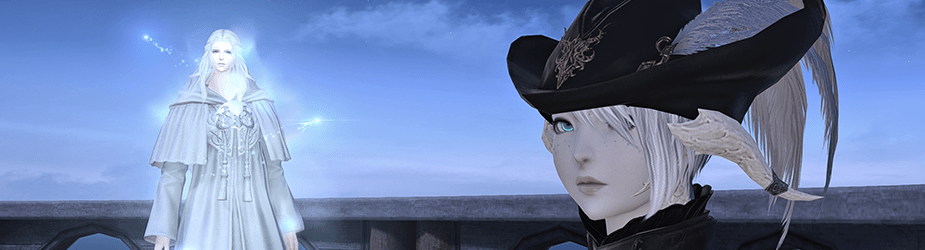
In an interview Naoki Yoshida said they “could have easily stretched out the plot into 7.0
or even 8.0”, and to this day I firmly believe they should have done so:
Originally I thought the Magus Sisters and Anima would be the 2 usual bosses with the final one remaining secret until the end (since they presented their key art the way they
presented the bosses from previous expansions, very clever trick), but I was very surprised to see them expedited in the first 2 dungeons so fast… Zodiark would have been a great final boss
that would make 6.0 end on a not so happy ending for once because, congrats, by defeating the villain you have effectively triggered the Final Days, you little shit, see you in 3 months to
figure out how to fix your mistakes :)
6.0 to 6.3 could have explored in a lot more detail how the Final Days were unfolding, with unique environment changes (similar to the very ominous and omnipresent Telophoroi towers prior
to 6.0), weather effects, or maybe even FATEs during that period. And Hydaelyn would have been an obvious choice for a 6.3 boss, or maybe a 6.2 one the way they’re currently doing with the
Archfiends, and then the Endsinger in 6.3.
With that plot structure Thavnair and Garlemald could have benefitted from an additional area to further develop their respective lore, with Mare Lamentorum as the final area (since the whole
selling point of the expansion was going to the moon after all).
Also because of how much they crammed in this expansion, I find Hermes and Meteion not sufficiently developed… They’ve only gotten half an expansion (but really just one area) to be
introduced and reach their end, despite their existence having consequences on the ENTIRE game story so far, and it makes it a lot harder to see them as people your Warrior of Light
relates to and bonds with.
I also find it absolutely unfair that the Endsinger didn’t get her own theme, but rather a medley of the themes of previous expansions, which all alluded to
their respective final bosses with strong identities. It’s a great medley for the end of a journey and the end of this big story arc, but it makes even more apparent how much her
identity is lacking. For someone representing the end of everything, the inescapable truth of the universe, and uh probably the most powerful being we’ll fight for some time, she
deserved a lot more :( And even though the mid-fight moment of "oh, did we fail?" and the subsequent cutscene are very hype inducing (the first time), the second half of the fight was also
disappointing (I always raise an eyebrow when someone dies here, it’s like Sastasha level of difficulty), but I haven’t tried the EX version yet, so maybe it gets better there.
Another issue with this very sped up character exposition is that a lot of people seem to not really understand Hermes’ tragedy. I’ve had friends describing him as an incel or
wondering why he didn’t simply kill himself, or saying that he was just a really depressed guy, and I’ve seen so many similar comments on reddit and twitter, and to me it really
shows how the entire point has been missed by a lot of people. The side story that was posted later maybe illustrates better how this is really about how fundamentally broken the world
is in Hermes’ eyes, on a moral and ideological level, and how alienated he feels in it when no one else around him shares his feelings (probably also why he created Meteion in the
first place). What he’s first attempting to do to remedy this is to find an escape, an alternative solution that would prove that there is a morally better way to live, not only as
an individual but as an amalgam of living and breathing creatures sharing the same territory, star and universe. But upon hearing Meteion’s report and mentally collapsing in despair,
he instead decides to put his own kin to the test by effectively dooming them, challenging them to find an answer to his existential dilemma.
This is not just a simple case of depression, and suicide would not have had any impact whatsoever on the society he was hoping to change, if anything it would have maintained the
dystopian status quo he was trying to escape from, and Amaurot would have probably seen the same end as the Nibirun or the Ea. Ultimately, this is the tragic story of an individual who
(in his eyes) was the only one to perceive the looming collapse of “humanity”, failed to find an alternative to it, and precipitated a crisis to force people to confront their mortality
and make Big Decisions ™ for the sake of their survival… in one form or another.
Or maybe I’m just projecting my own existentialism that is intrinsically linked to very real global issues that we as a species are entirely responsible for and still ignoring to a
great degree until a crisis inevitably erupts and we have to face big decisions and maybe start a revolution or two that will unfortunately probably involve violence to some extent,
who knows :^)
Zenos felt completely useless, and I don’t understand why he had to come back. For most of 6.0 he’s just parading around asking for attention without really accomplishing anything
or posing any real threat (except That One Time I'll talk about later), and with such a huge buildup since Stormblood (and several wardrobe changes lol) I was expecting more. I never
liked this character because of his profound lack of depth (he’s just a crazy guy obsessed with the Warrior of Light), but in Stormblood at least he almost razed Rhalgr’s Reach to
the ground and defeated you twice in solo duties, so he had more presence as an antagonist.
I absolutely loved the scene where Alisaie gives him a piece of her mind and he’s forced to accept the Scions have bigger fish to fry, and because of it I was also hoping to never
fulfill his one and only request of fighting him one last time. It would have been the ultimate satisfaction, to force him to live like anyone else and deny him his one joy in life.
But it sure did feel good to finally kill him. Please never come back.
The pacing of the story, again because of how much is crammed in it, felt very all over the place. After defeating Zodiark there’s a real sense of dread and urgency as you finally realize what you just triggered, but it’s immediately killed by the introduction of the Lopporits, and their section in the MSQ takes way, WAY too much time compared to uh, the looming apocalypse that will kill us all if you don’t do something about it soon. There’s a similar dip in the Elpis section (that I’ll touch on a bit later), and another one in Labyrinthos right before you depart for Ultima Thule, where the “something important is happening!!!” music theme is playing for so long (even more so if you do the side quests in parallel like I did) that it was the only time I had to mute the game because of how mentally exhausting it was. But pretty much from Zodiark until the end of Elpis I was in a constant state of “cool, but can we please address the elephant in the room that I may be responsible for, the more we wait the more people will die, can we move on for the love of Hydae-” which was very frustrating and made it harder to enjoy the more relaxed sections of the story :I
To this day I do not understand why Fandaniel needed to exist, or why Amon needed character development, suddenly. Once again it’s a character I disliked from the very beginning
(he’s just… another crazy guy, how original!!) but he really didn’t bring much and he’s so remotely different from Hermes I am unable to see them as one. On the other hand I loved Asahi
in Stormblood (he’s a sneaky little bastard with some extreme beliefs that can make him really scary), and it felt very nice to see him come back and say pretty much how I’ve been
feeling about Fandaniel from the start: why the hell did he need to use Asahi’s body to begin with, to play a completely different (and very cringe) character. Get his ass.
As I’ve been contemplating how late Meteion was introduced despite her huge role in Endwalker (and technically retroactively since 1.0), I’ve been thinking that she could have
replaced Fandaniel, not in the exact same role of course, but as some kind of weird kid that shows up out of nowhere, follows you everywhere and that you suddenly have to deal with,
without really knowing what her deal is. This could be either something she conceals on purpose (Meteion using her old persona to appeal to you while quietly determining if you are
worthy of the trial Hermes left her to carry out) or something that happens accidentally (Meteion is so full of despair after all these years she unconsciously sends an amnesiac
version of herself on Etheirys, seeking an answer just like Hermes did). Either way, it would give you a lot more opportunities to bond with her, and reflect on your time spent
with her when you finally realize who she really is when you meet her in Elpis… It would also solidify her position as an antagonist that isn’t really one, since not only is she not
doing something unspeakably evil (beyond confronting you with the reality of life and death of the universe), but she’d also be someone you got to hear the words, share the feelings and
know the thoughts of (see what I did there). Which in turn would make the final cutscene with her also a lot more impactful, since you’d have been through good times and bad times
together, and she’d have seen up close how you’ve managed to push through it no matter what and she can accept, at last, that answer.
Speaking of which: how in the hell is the Warrior of Light completely and utterly mentally unscathed by all of this??? They’re always ready to jump into action, no self-reflection, no doubt whatsoever, no guilt, no fear, no burnout, nothing? HOW????
Elpis felt even more scattered than what I’ve already mentioned about the overall narrative pacing, trying to introduce way too much all at once. Between the lore exposition, fan-favorite Uncle Hades teaching a lizard how to fly under the amused eye of his boyfriend Hythlotadeus, Mommy Venat challenging you to a fight but also slowly becoming conscious of the role she will have to play in their incoming doom, and Hermes acting like a clown running after an axolotl, while you’re here on an urgent mission to find the key to save the entire universe, while everyone back home is fighting tooth and nail waiting for your return….. It felt very tone deaf, and once again something that could have benefitted from being introduced in later patches (or even in 7.0 and beyond) to properly give all characters and lore sufficient exposition.
Speaking of Elpis and time travel: with G’raha Tia in Shadowbringers I was already squinting a bit at how easily they bypassed the whole time paradox dilemma (easy, just die in one
timeline and put your soul in the body of your other self in the other timeline, who’s probably totally fine with it despite not being able to give consent! and automatically lose your
100+ year old maturity to become a fan-favorite catboy!), but I was extremely concerned by the WoL’s arrival in Elpis. It might be due to the dreadful feeling of guilt I’d been feeling
since the defeat of Zodiark, but the last thing I wanted was to accidentally modify the course of history and make things even worse for everyone.
…And then your WoL immediately drops the charade and explains the entire plot of the game to Hades, Venat and Hythlotadeus, which to me is the worst thing you could possibly do when time
traveling. But thankfully Hermes had his magical “reset (almost) all characters so that all the WoL’s actions don’t trigger a huge butterfly effect in the distant future” spell and
everything turned out alright… how incredibly convenient :)
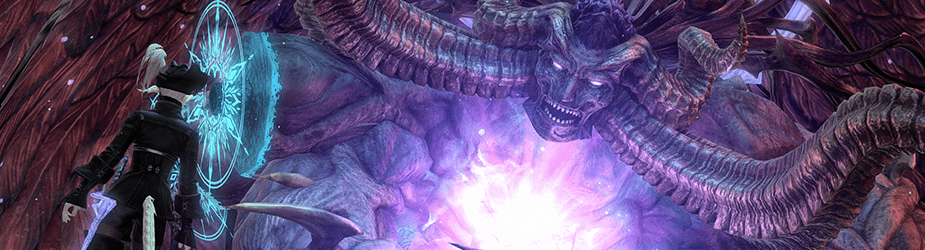
Hydaelyn has been incredibly manipulative towards the WoL until it was way, WAY too late to turn back, and apart from the opening scene it’s… barely addressed. I once again wonder how the WoL is not having their own existential crisis as the One Voice Who’s Been Telling You What To Do From the Beginning fails to mention that by defeating Zodiark (which she’s been asking you to do since 2.0 if not earlier) you would precipitate the end of the star, and you better be strong enough to prevent it or else. The Scions seemed completely unfazed too (that sure is some blind faith in an unreliable entity!!), and the side quest with Omega insinuates that she’s more “evil” for shattering the Source instead of addressing that. (full disclosure: to me shattering the Source was damage control more than anything, things were already beyond fucked by that time, so I really don’t see it as that bad)
The Garlemald solo duty was definitely one of the moments of this expansion. Solo duties used to stress me out because I was a lousy player when I started, and AIs were very
unreliable at the time (see: Alphinaud in the Regula solo duty), but this one will
be #1 for a long time. It forces you to confront how ridiculously overpowered you are as the WoL next to the average guy (a Garlean who can’t use spells no less), with the scariest
countdown, knowing that somewhere out there your body and its impossible strength are in the hands of the last person on Etheirys who should have them.
Terrible. Fucked up. Love it.
However, as strong as that moment was, the timing of its introduction felt a bit awkward, because as much as it was a great climax right after a very tense situation with the
Ist Imperial Legion, it also ended up as… nothing. I was bracing myself for the worst, and literally nothing happened. Fandaniel and Zenos just gave us a huge scare with no
consequences whatsoever. Guess we’ll just… do this dungeon and run after them since they spared us all?
I’ve mentioned this on Twitter before but: remember how there’s this whole lore around tempering
and how they wanted Shadowbringers to make us reconsider good and bad? How is the WoL completely unaffected by Hydaelyn’s influence? Why does everyone still see her as an objectively good and
benevolent (and unbelievably powerful) entity even after Emet Selch reveals she’s a primal, especially after all the primals we’ve defeated and temperings we’ve witnessed?
…Anyway I just think it would have been neat to have a moment where we lose control and free will of our character to remind us of that scary little detail :)
Hydaelyn’s fight was a lot easier than expected, much easier than Zodiark (whose form was still relatively incomplete, even if she herself was exhausted, fair) or the Endsinger, or
even Venat’s super cool, super scary solo duty… It’s probably because it needed to be simple enough to be completed by the Trust System, but it’s a bit of a let down :I
On the other hand, the theme of this fight is incredibly stressful to me, and I love the sense of importance, urgency, and gravity in it… Farming the EX version of it
(even with chill friends in vc) left me very anxious lol
I thoroughly enjoyed the real darkness of the cutscenes in Thavnair during the Final Days.. The father watching his son turn into a blasphemy only to then immediately see it
crushed under a bigger monster’s foot, only to then witness the Satrap of Radz-at-Han coming to his aid and getting eaten alive… Whew. And I was so shocked by the brutal violence
with which the mother was thrown into that pool with her baby my jaw dropped and I immediately wondered how that had made it past the notoriously strict PEGI restrictions in Germany
(they probably didn’t check, did they).
However, as high quality as these scenes were, I have to say…. The Calamity felt like such a bigger deal, despite affecting a much smaller region of Etheirys. You can still feel
the consequences of it 5 years later through the dialogue and the environment. The Flood of Light on the First also left a much stronger impact on me, for the exact same reason:
100 years, and people still feel the consequences of it. Lots of knowledge has been lost, and most of the star is uninhabitable and unexplorable (until Gaia and Ryne arrive… hope we’ll
get to see more of this later). In comparison Radz-at-Han recovered surprisingly fast from the Final Days, Garlemald was already in shambles so it didn’t change things too much for them,
and apart from the Satrap, this one mother, and the merchant who was helping out Matsya… a lot of unnamed background NPCs died sure, but it didn’t feel as horrible as it should have been.
That’s also why earlier I was talking about having the Final Days occur over the span of several patches, that is what they did in 1.X with Dalamud slowly coming closer and closer until
the Calamity started, and even if I wasn’t there for it, just hearing the stories really shows how special this moment was. That and those
nightmare cutscenes upon logging in or out would have been incredible… Meteion’s “song”, the one you faintly
hear in a cutscene while you look at the moon from your room, would have been perfect for it too.
The portrayal of Sharlayan, an absolute democracy that privileges non-intervention, neutrality and higher purposes (such as Knowledge ™ and uh secretly making plans to displace most of
the Etheirys population in outer space) as something morally questionable and not necessarily “good”, was very interesting, but it could have been explored a bit further. Namely, how
come that in this perfect democracy things such as the gigantic Leveilleur Estate and its army of butlers still exist? Why are there social classes with very distinct financial
backgrounds, the upper one being seemingly passed down from generation to generation? The Gleaners’ guild probably outnumbers the 100 members of the Forum, and given how they’ve been
treated and how Erenville had to remind them that on paper they are all equal as scholars, I very much doubt they would agree to such a discrepancy, no matter how many arguments in favor
of meritocracy they hear.
Likewise, even if Alphinaud and Alisaie were first introduced as spoiled brats (with dedicated bodyguards even), by this point I think the various events they went through, Shadowbringers
especially, must have made them really reconsider their privileges, and it’s strange that they simply continue to accept the current status quo of Sharlayan and benefit from their parents
so much.
But my real beef with Sharlayan is not about Sharlayan itself, but that its ambiguous “neither good or bad” role completely overshadows the big player in the game’s overall story that also
deserves a lot of entirely legitimate criticism: Garlemald.
While I appreciate the insertion of the civilians’ perspective in this internal and external conflict, there is a lot to be said about how they still blindly followed their leader,
their army, and their war crimes for generations. What’s really baffling is that Alphinaud gives a speech about this exact issue in Shadowbringers, and forces the aristocrats of Eulmore
to face their complicity in Vauthry’s schemes and abuse of the lower classes. But in Garlemald none of this happens. Suddenly everyone seems to have forgotten the countless war crimes,
the experiments on living subjects, the war that ended only recently in Othard and Gyr Abania, the war still raging over the ruins of Bozja, how some regions are still under Garlean rule,
the freaking Calamity, and the very real material and psychological consequences all of this has on local populations and refugees. There is a vague mention before you leave for Garlemald
that a lot of people opposed taking part in the operation, but apart from that none of this is ever mentioned. Even worse, someone even blames you for the death of her comrades in
Praetorium.
Praetorium!! A place in the middle of Eorzea they invaded so they could store a war machine with massively destructive (but partially unintentional) powers!! What is your problem!!
And so every interaction with the Garleans is turned into proving to them that peace and coexistence is possible, and them either blaming you for everything until they’ve had enough and
finally resign to listen to you, or dying out of mistrust or misplaced political ideologies. Sure they’re currently going through a rough time and we’re here to help
(and also mend our issues and end the conflict since they’re not really in a position to refuse anymore), but a minimum of accountability, the way Eulmore had to realize the error in its
ways, is crucially lacking. I had hoped that this would be explored in the final role quest (since each role quest did discuss the ambiguous past of each region, with the exception of
Thanalan and Thavnair, and that was really interesting and enjoyable) but no! Instead it’s Fourchenault who opens his eyes and realizes how evil and heartless Sharlayan was for
prioritizing neutrality over helping others. SIGH.
This also feels very different from the incredible series of cutscenes just before Shadowbringers where the leaders of Eorzea meet Varis face to face for the first time in an attempt to
start “negotiations”, and he promptly throws their accusations right back at their faces to show them that they’re not entirely blameless either (and with good cause!). But what really
made Varis a genuinely great morally ambiguous character was that, despite this arrogant facade at the negotiation table, the truth is that he’s torn between doing what he thinks is best
for Garlemald, and what the Ascians want him to accomplish to plunge the star into chaos for their own goals. That is an antagonist that is fully aware of his crimes, but that you can
still sympathize with because you understand the difficult position he’s in.
But in Garlemald, there is no antagonist anymore. Only victims. The political and military system that upheld the entire Garlean society has magically collapsed because of two overpowered
crazy guys obsessed by their respective goals, and with them they took all the blame away from what engendered and supported all the suffering, death and ruin that Garlemald brought on
other countries.
Obviously, when you look at a certain nation from the last century that very clearly inspired Garlemald… you know that it’s not that easy. A charismatic leader would be nothing without a
strong network of loyal or ideologically aligned politicians and officers that enforces military campaigns, laws and propaganda to keep the population in check. Nor would his death
suddenly absolve everyone involved directly or indirectly, consciously or unconsciously of the crimes they took part in. And that is something that is completely disregarded in the
portrayal of Garlemald as of now.
Also to clarify: I’m not saying that every single citizen of Garlean should be blamed for what Garlemald did, and sorting out who should be considered “guilty” and who shouldn’t is a
messy affair for sure, but that also doesn’t mean we should simply give everyone a “get out of jail free” card and end it there, even if they’re currently facing a crisis. Once again if
you look at real life examples, even when only a fraction of people were trialed and sentenced for the crimes perpetrated on a national scale that the entire population was benefitting
from directly or indirectly (well except for those being exterminated by the system), there are real phenomenons of subsequent national shame and guilt, partly due to strong stigmatization
from other countries (that still linger 75 years after through media and bad humor), but also because a good chunk of people have a conscience and recognize their accountability on a
national level (and others were also actively working against the system when it was still in place). In Garlemald, from what we know so far, none of that has occurred. What we see
instead as the majority is what some people in Germany or in the US still do to this day: deny everything that happened, justify it with your questionable ideologies, shift the blame,
or dodge the question entirely.
But considering Japan’s own very questionable actions (notably during WW2), and how very reserved they
are about it to this day, especially if you look at Shinzo Abe’s ultranationalistic views... none of this is very surprising, unfortunately. Just very disappointing, after the much more politically engaged themes of Shadowbringers.
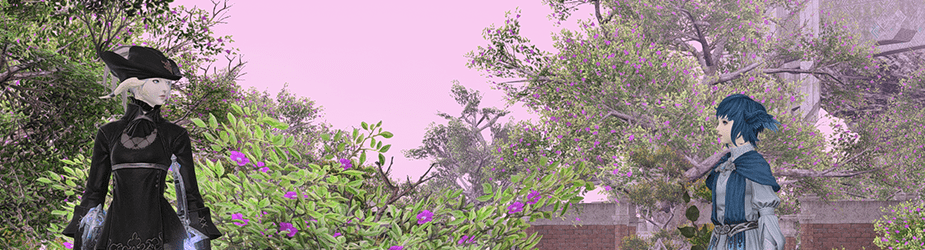
Going on the moon was one of the things I was looking forward to the most when Endwalker was announced, and everything until the defeat of Zodiark really built up this mystical and ancient atmosphere for a place that has long remained untouched by the inhabitants of Eitheirys (with the exception of the Allagans, of course, it’s always the Allagans), and I was sooo excited to explore more of the moon and encounter more strange local creatures like the lunatenders.. What I didn’t expect was to find that half of the Mare Lamentorum area is dedicated to the Lopporit base, which is unbelievably big… and unbelievably empty. Despite the obvious in-lore “Amaurotines are just really tall ok” justification I really don’t think it was necessary to show “so much” of it when it offers… so very little. If anything I found Smileton a lot more interesting, with a lot less explorable areas. But overall I would have preferred to visit more of the moon and learn more about its ecosystem, or about the Watcher and the historical events he witnessed.
Why does Argos exist I have never seen such an ugly dog and his resemblance to Minfilia is extremely disturbing and ethically questionable.
The gimmick of summoning 7 allies at your side to form a Full Party that was introduced by the Crystal Exarch in Shadowbringers was really, really cool, especially when so far the
explanation for why you fight these fights with other people or how you find them was “oh you know, just call your friends… the ones from the Adventurers’ guild or something” for the
longest time. But when you see it happen for the 1892311823rd time it feels a lot less impressive and exceptional.
Likewise, Azem’s soul crystal has repetitively become a deus ex machina device since you received it in Shadowbringers, and it’s become quite exhausting… especially when you use it twice
in a row in the final moments of 6.0. It really downgrades the quality of the storytelling, the tension and the suspense when all you have to do to diffuse the situation is to pray very
hard on a stone and everything turns out fine :)

Besides being one of the seemingly very few people who find G’raha Tia, Zenos and Emet Selch anything but attractive or relatable, I am also one of the few people who doesn’t really get
the hype around Azem. I thought Venat/Hydaelyn was going to be revealed as being Azem, which would entirely make sense to me, and if I remember correctly in another interview
Naoki Yoshida said that they considered going down that route too. I might also have been misled by playing a character using she/her pronouns and not realizing until much later that Azem had
different pronouns based on the character you play. But now it’s become this very important, very mysterious character that works great for this huge part of the community that revels
in the opportunity of building and developing their little characters, but as someone who’s completely detached from it because I simply see them as one individual, and my character as
another, I don’t really see the point of speculating or imagining what they were like if they’re dead anyway…? And on the other hand I’d like to say “ok well, my headcanon is that Venat
IS Schwarzwaelder’s Azem” and be done with it, but again because this character has become SO IMPORTANT it’s impossible to ignore it… There’s just no way they’ll not become relevant again
later in the story, we know too little about why they abandoned the Convocation of the Fourteen or what they were doing during the Final Days.
And then the dev team hides a small reference to them in a dungeon that should have been built long after the Source was shattered, making things even more confusing…
I am honestly so done with ancient Greek and Roman references I am begging you please there are so many other mythologies and languages in the world to take inspiration from, I don’t know if it’s because I’ve mainly lived in France where they love this stuff or if it’s because of the ancient latin and greek classes I’ve taken but please I have eaten this shit all my life I need something new I’m going insane :)
I want to write a longer article about this at some point but I really haven’t enjoyed the whole thing about the Ancients ever since it was introduced in Shadowbringers. The trope of an
“ancient civilization superior to us in all ways including unspeakable technology that suddenly collapses, maybe because of their own arrogance or something” is very well known and used
in tons of media (Atlantis comes to mind, but in Japanese media specifically there’s a lot of similarities with Okami between the extinct Celestials fleeing the Celestial Plain, the Moon
Tribe building an ark to rescue them, etc). In fact, it was already used in this very game!! So… why did they use the exact same trope when the Allagans were already there to do the job…?
But more than that, what bothers me is that this trope, which bears a lot of similarities with the “ancient astronaut” theory, feeds into this false narrative that the current version of
humanity is somehow inferior to a “superior race” that we should seek to return to. Emet Selch said it himself, in his eyes the WoL is but a broken husk, a shard of someone he once knew.
And obviously this is a very dangerous narrative linked to very dangerous ideologies, like how some (white) people convinced themselves that civilizations outside of Europe couldn’t
possibly figure out how to build gigantic monuments with their own technology, and therefore must have received help from much more advanced entities… Like aliens.
What’s even more problematic is that Eorzea is shifting towards an era of peace between the city states and the local tribes, the latter being finally recognized as proper people and
not “beastmen”. The best example of this change is how the Beast Tribe Quests were recently rebranded as Tribal Quests. There’s even a great
page in Encyclopedia Eorzea about this whole issue. So… when you discover in The Fractal
Continuum that the Ixal descend from Allagan chimeras, what does that make them? When you realize that the first boss of Ktisis Hyperboreia looks an awful lot like a Hrothghar, what does
that mean for them? When you read the notes in the same dungeon and learn that they created a “highly intelligent bipedal wolf capable of using tools” concept, what does that imply for
the Lupin? Should we consider all three of them inferior to the rest of Etheirys, because they are not true shards of Amaurotines but species artificially created by them or the Allagans?
As messed up as this reasoning is, it’s one you can easily reach by just finding out about these bits of lore, and Square thinking it was worth adding them in on top of this double
“ancient superior civilization” trope is what’s really fucked up if you ask me :)
Also you know who fetishizes the ancient
Greeks and Romans and perpetuates this myth about them as superior, more intelligent and exclusively white civilizations before “the Dark Ages” happened? :)
And btw it’s kinda weird that the majority of the current Amaurotine antagonists (or disruptive elements at best) have dark skin when it’s usually something that’s underrepresented in
this game :)
Did you also notice that said characters don’t have entirely custom faces or hairstyles compared to their white counterparts, despite being equally important story wise :)
What could it mean :)
I don’t think I have ever ugly cried in front of a movie or a game as much as when Alisaie refuses to leave you to confront Meteion alone. In Japanese her voice breaks too, which… pffffff my heart. You really got to see these characters grow and develop over the course of several real time years, and that makes all the difference huh.
I have been suffering from NoErenvilleThisPatch disease for a full year, I am about to go feral.
As mentioned above I found the role quests really interesting as a way for (almost) each nation and their leaders to reflect on their troubled past and decisions that are not necessarily
welcomed by the entire population. The healer role quest especially was very compelling to me, and it feels nice for once to see a woman being able to redeem herself for her crimes and
bear the weight of accountability, instead of simply dying (looking at Ysayle, Yotsuyu and Misija). The caster role quest, however, was utterly embarrassing and I am incredibly
disappointed in Aymeric’s stance. We know since Heavensward that basically everything Ishgard was built on, its history, its double caste system, its reasons to fight the war, are
straight up lies, perpetuated by the clergy no less. Oh yeah, and remember how they imprisoned, tortured and killed anyone they considered to be a heretic and hugely
benefitted from this? :)
But instead of embracing the collapse of their political system as a way to rebuild their society with a clean slate, Ishgard starts a government that maintains the double caste
system (which is entirely made up, they all know this!!) in the form of the House of Lords and the House of Commons. The caster role quest questions the role of the Church in all this,
as some people (with very good reason!!) blame them for the Dragonsong War and the losses they have suffered, and wonder if they should have any political power at all. I cannot tell you
how frustrating it is to see characters with hyper-French names argue about this, when the separation of Church and State is one of the cornerstones of post-monarchist and post-imperialist
France, first introduced more than 200 years ago with the French Revolution, and firmly enforced a century later. Once again, characters shy away from holding the perpetrators of this
propaganda accountable, on the basis that “it’s the Final Days and anyone might turn into a blasphemy if they feel too bad”. The
“Proletarian Clergyman” NPC made entirely reasonable demands during the debate
such as a reform of the clergy hierarchy, an investigation of the upper ranks’ deeds, trials if deemed necessary, and only after that an examination of their doctrines, but he was
completely ignored? And the debate ends on a ridiculous compromise where they just decide to reform their teachings… And everyone walks off free and blameless, all privileges attached,
despite some of the clergy having caused unspeakable suffering on the nation’s people. It’s infuriating.
Aymeric is even worse in that regard, in that he was a strong figure of radical reform throughout all of Heavensward (until they eventually made him leader of the House of Lords and
he just accepted it…) but when you walk together through The Pillars he comments on how “we shouldn’t destroy the statues of the people who put us into this mess, even if tons of people
are demanding it, it’s part of our history after all :(”, which, once again, bears uncomfortable similarities with recent real life events and arguments defended by not-so-benevolent
political ideologies, who tend to forget the uncomfortable and non beneficial truth that behind the subject of these statues hides a much, much bigger erasure of history.
Also I just read a reddit thread about this where the OP is entirely right but because it’s reddit some of the comments are awful, and I’m even more pissed off about this now.
When Ultima Thule was described as being made out of Dynamis, this mysterious form of energy that relies on emotion, I was expecting an entirely surrealistic or abstract environment
that would show that, or something in the vein of the first solo duty of the Save the Queen questline, where you explore Cid’s fragmented memories in a deconstructed, realistically
impossible version of Bozja (which to me is one of the coolest character development moments in the game). So… I found it a bit disappointing when it turned out to be a banal amalgam of
regular floating islands representing different civilizations. In space.
Meeting face to face with the inhabitants of the Dragonstar and being confronted to how they were facing extinction was incredible, though. But the whole “riddle me this existential
crisis and I shall grant thee passage to the next area” pattern was a bit too on the nose, and definitely not as impactful as it could have been, because when you think for 2 seconds you
realize that none of your companions will really die, because they have to be alive for the Trust system to make sense :^) (for now at least)

Finally, while I related a lot to the whole existentialist, nihilistic and fatalist themes of the story, because I’m currently going through these issues right now (surprise), ultimately
I was disappointed by the resolution of these dilemmas, as I often am when I consume media dealing with these topics, because… they don’t really offer a reasonable, rational answer.
Especially in anime, it’s very much a question of simply “never giving up!!” or knowing that “your friends will always be there for you!!” or the good old “fall seven times and get back
up eight times” Japanese proverb. Which is not always realistic, or even possible.
Mahou Shoujo Madoka Magica, an anime series I adore for its portrayal of absolute despair in the face of a system that exploits labor and lifeforce for the benefit of others (hmm sounds
vaguely familiar), suffers from the same issue: there’s just no way Madoka has enough optimism to sustain the entire universe forever (and I absolutely love how the third movie
establishes an antithesis to that ending, and the fourth movie can’t come soon enough). I also think this is why it took so long for the Rebuild of Evangelion series to end, as
Evangelion is undoubtedly the top dog when it comes to tackling these issues, because it’s a work that is so personal to Hideaki Anno, and finding a satisfying answer to Shinji’s
existential dilemma took… literally 3 different endings. 4 if you count the manga. In the span of 25 years.
Anyway, I’m still curious to see how the story will continue moving forward (not super interested in the current arc right now even if it has good characters but we’ll see), but if you
must know I already have terribly cruel existentialist ideas for Schwarzwaelder’s future :) I just hope that the plot reaches similar conclusions before I go too far with them lol
(who am I kidding it’s way too late no one can stop the power of tragic catharsis)
I don’t like having to say this but because people misinterpret things you say online so easily I feel the need to end on this note: Endwalker was a great expansion, probably my third
favorite behind Heavensward (nostalgia effect, bangers, cool environments, kill the pope) and Shadowbringers (best opening sequence, bangers, strong politics, kill catholicism). So
despite all the criticism you see here, I enjoyed it a lot. Usually when I rant about something it’s because I’m so excited for it that I start imagining how impossibly great it will be,
and I’m utterly disappointed when it doesn’t reach that standard, or worse, when it goes against previously established ideas in the same work. And I know in my guts that it could be so
much better than it already is! That's what criticism is about baby!
So keep this in mind ok bye :^)

